

When I started TechZonical during the 2020 lockdown, I had a laptop, a phone camera and more enthusiasm than time. Today the channel has 29K+ subscribers and more than 500 videos, and it's still mostly a one-person operation.
Running a channel alone is hard, but it's not impossible. The secret isn't working more hours. It's having a workflow that removes decisions, protects your energy, and puts your effort where viewers actually notice it.
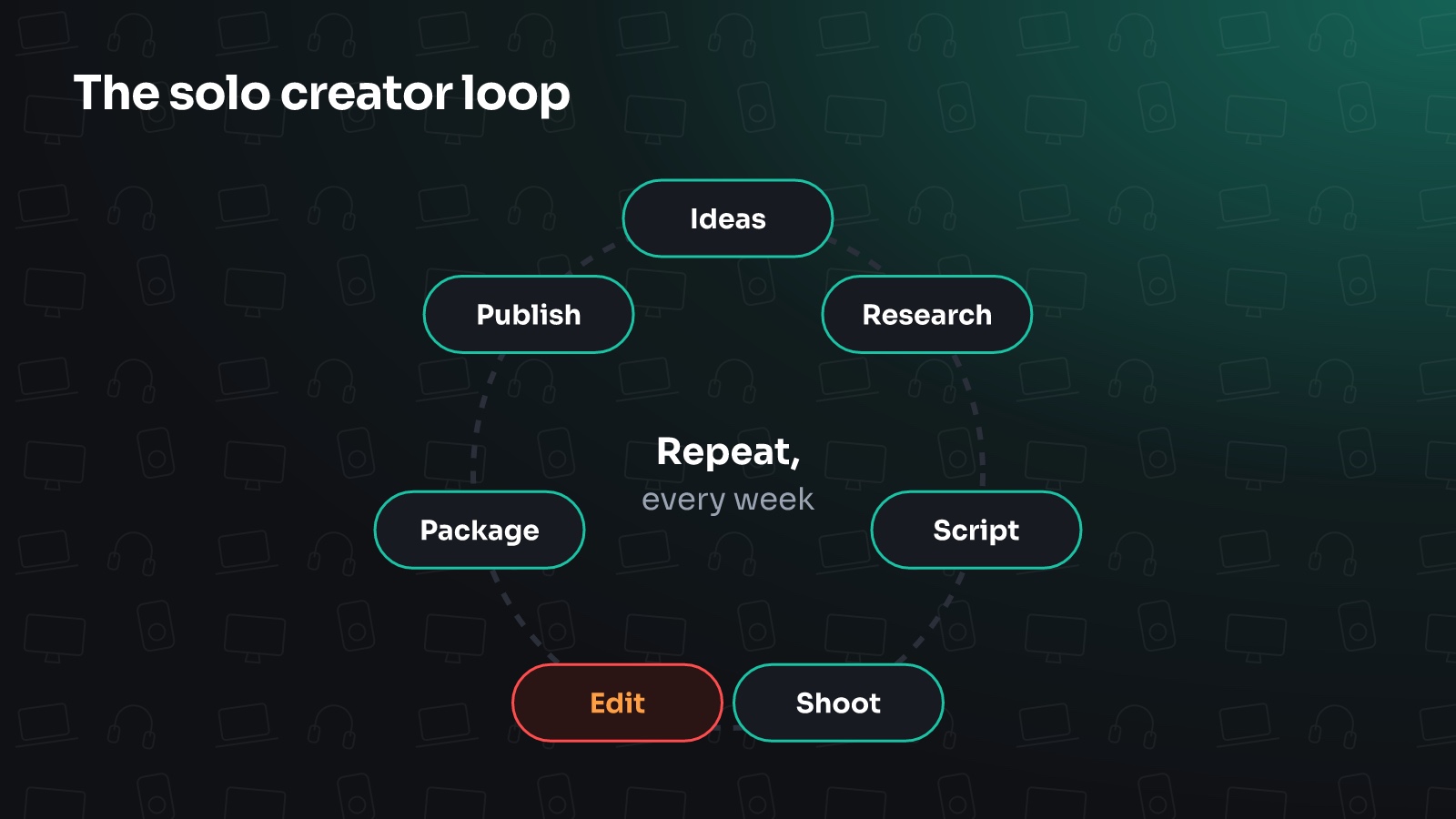
Here's mine, from idea to upload.
1. Ideas: start with the viewer's question
Every video starts with a question someone is already asking. For a tech channel, that's usually some version of "what should I buy?" or "is this worth it?".
I keep a running list of ideas from three places:
- Comments and messages: the most honest source of what people actually want
- Search: what people type into YouTube and Google for my categories
- My own frustration: if something confused me while buying a gadget, it probably confuses others too
The rule: if I can't write the viewer's question in one sentence, the idea isn't ready.
2. Research: decide before you shoot
The biggest time-waster for solo creators is figuring out what you think while you're recording. That's how you end up with forty minutes of footage for a ten-minute video.
So I finish my thinking first:
- Compare specs and prices from reliable sources
- Decide the verdict for each product before recording
- Note the two or three points that truly matter to the viewer
When you know your conclusion, your recording gets shorter, your edit gets faster, and your video gets clearer.
3. Script: write it like documentation
My day job is technical writing, and it shapes how I script. A good script is a good document:
- One idea per section, in a logical order
- Plain language, no jargon unless I explain it
- A clear structure the viewer can follow: the problem, the options, the verdict
I don't read a script word for word on camera. I use a structured outline with the key lines written out. It keeps me on track without sounding robotic.
4. Shoot: batch everything
Setting up lights, camera and audio takes time. Doing it once for one video is expensive; doing it once for three videos is efficient.
When I can, I:
- Record several videos in one session
- Keep my setup ready, so "starting" takes minutes, not an hour
- Record clean audio first and foremost, because viewers forgive average video far more than bad sound
5. Edit: let the tools do the mechanics
This is where most solo creators burn out, and where I lost the most time for years. Cutting pauses, building text graphics, finding assets, placing music, hitting loudness targets: none of it is creative, but all of it takes hours.
That's the reason I built Cutgenie. Now I edit by describing what I want ("cut the pauses", "add a lower third at 0:05", "make it as loud as YouTube videos") and spend my time on the decisions that need a human: pacing, emphasis, what stays and what goes.
The result: a full video that took me about 30 hours to edit now takes about an hour and a half.
You don't need Cutgenie to apply the principle, though. Whatever editor you use:
- Build templates for titles, lower thirds and end screens
- Save presets for colour and sound
- Automate anything you do the same way every time
6. Package: the title and thumbnail are half the video
You can make a great video that nobody clicks. Packaging deserves real time:
- Write several title options and pick the clearest, not the cleverest
- Make the thumbnail readable at a tiny size
- Make sure the title and thumbnail promise what the video delivers
7. Publish, then repurpose
After uploading, every video can work harder:
- A vertical cut for Shorts
- A written version for a blog or a site like techzonical.in
- A community post to bring regular viewers back
Repurposing turns one recording into several pieces of content, without another shoot.
8. My weekly rhythm
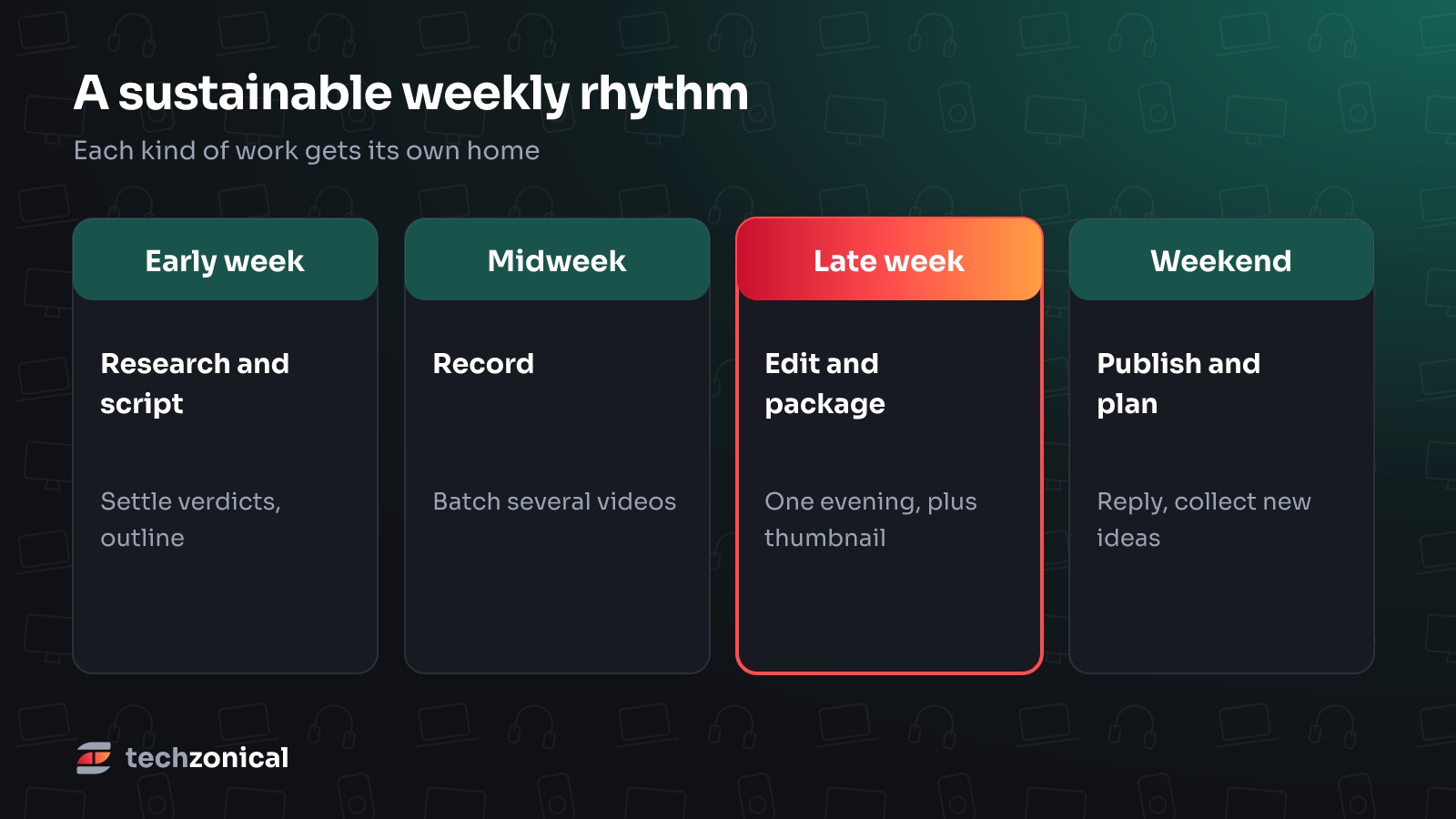
A workflow only works if it fits into a real week. I also have a full-time job, so the channel has to live alongside it. Here's roughly how a week looks when things are going well:
- Early in the week: research and scripting. Short sessions in the evenings are enough to compare products, settle the verdicts and outline the script.
- Midweek: recording. One focused session, with everything ready to go. When I can, I record more than one video.
- Later in the week: editing and packaging. With the mechanical work handled by Cutgenie, the edit fits into an evening, which leaves real time for the title and thumbnail.
- Weekend: publish, respond and plan. Upload, reply to comments, and note new ideas from what viewers are asking.
The exact days don't matter. What matters is that each type of work has a home, so I'm never trying to research, record and edit all on the same night.
9. The checklists that save me hours
Technical writers love checklists, and for good reason: they move decisions out of your head. I keep three:
Before recording
- Battery charged, storage cleared, microphone tested
- Product clean, lighting set, background tidy
- Script outline open where I can see it
Before exporting
- Pauses removed, audio levels consistent, loudness at YouTube's target
- Spelling checked on every title and lower third
- Private information blurred, colour consistent across clips
Before publishing
- Title, thumbnail and description match the video's promise
- Chapters, links and end screen added
- Vertical version ready for Shorts
A checklist feels slow the first time. By the tenth video, it's the fastest way to avoid re-uploading.
10. Protect your energy
The most important part of the workflow isn't a step. It's sustainability.
For years I wanted to start a channel but didn't have the time or energy. When I finally started, I learned the hard way that burnout kills more channels than bad videos do. A few habits help:
- Consistency over intensity: a steady schedule you can keep beats bursts you can't
- Remove decisions: templates, checklists and presets mean less thinking about the boring parts
- Get the boring work off your plate: automate it, batch it, or hand it to a tool
- Stay curious: make videos about things you genuinely care about. It shows.
The takeaway
Solo creators don't win by out-working teams. They win by building a workflow where every hour goes into something the viewer will notice.
Find your biggest time sink. For most of us, it's editing. Then attack it first. Everything else gets easier once you have your evenings back.


